November 10, 2026
The Lead Came In. Now What?

TL;DR
Most small businesses spend everything on generating leads and almost nothing on what happens in the hour after one arrives. Here's where enquiries actually get lost, what a workable follow-up system looks like, and whether you need a CRM at all.
In This Article
Almost every small business we talk to wants more leads. Very few can tell us what happens to the ones they already get.
The short answer is that responding fast, ideally within minutes rather than hours, meaningfully improves your odds of reaching the person while they're still deciding. For most of the businesses we see, the revenue sitting in the gap between an enquiry arriving and someone responding to it is worth more than the extra work a bigger ad budget would buy, and closing that gap costs a lot less.
This article covers what's actually true about response speed, the specific places enquiries go missing, and what a follow-up system looks like when you're a small team without a sales department.
The statistic everyone quotes, and what's really behind it
You'll see a lot of confident numbers about this. Respond in five minutes and you're 100 times more likely to convert. Or 21 times. Or 391 percent better off. These get repeated everywhere, usually by companies selling software that promises to make you faster.
Here's the honest version. Most of those figures trace back to a small number of studies, the best known being research published in Harvard Business Review in 2011, which found that firms attempting contact within an hour of an enquiry were roughly seven times more likely to qualify the lead than those trying an hour later, and dramatically more likely than those waiting a day or more. That's genuinely useful research. It's also fifteen years old, and the other multipliers come from different studies rather than from that one. The 100 times and 21 times figures trace back to a 2007 study that compared a call at five minutes against a call at thirty, and they measure reaching a person and qualifying them, not converting them. The windows and the outcomes are different, so the numbers aren't interchangeable, and most of this research was run or co-authored by companies selling response software.
So treat the specific numbers with suspicion and hold onto the direction, which has never been seriously disputed and which you can verify from your own experience as a customer. When you request a quote from three companies, you don't wait patiently for all three. You go with whoever gets back to you first and seems competent.
That's the whole mechanism. Speed doesn't work because of psychology tricks. It works because your competitors are slow, and the person who answers first is usually the only one who gets a real conversation.
Where enquiries actually go missing
When we trace this for a client, the leak is almost never where they expect. It's one of four places.
The notification never arrives. Form submissions go to an email address nobody watches, or they land in spam, or they were routed to a staff member who left. This is more common than it sounds and it's worth testing rather than assuming. Fill in your own form right now and see what happens, because a site that quietly stops producing calls often has a broken notification behind it.
Nobody owns the response. The enquiry arrives, two people see it, each assumes the other has it, and it sits. Shared inboxes without an owner are where leads go to die quietly.
The first attempt fails and there's no second. Somebody calls once, gets voicemail, and the lead is effectively abandoned. Most enquiries are not won on the first attempt, and the businesses that win them are simply the ones that try again.
The response is slow because the work is manual. Everything depends on somebody noticing an email and deciding to act. That works fine on a quiet Tuesday and fails completely during a busy week, which is exactly when you can least afford it.
What a minimum viable follow-up system looks like
You don't need enterprise software. You need four things in place, and most businesses can set up the basics of lead management in an afternoon.
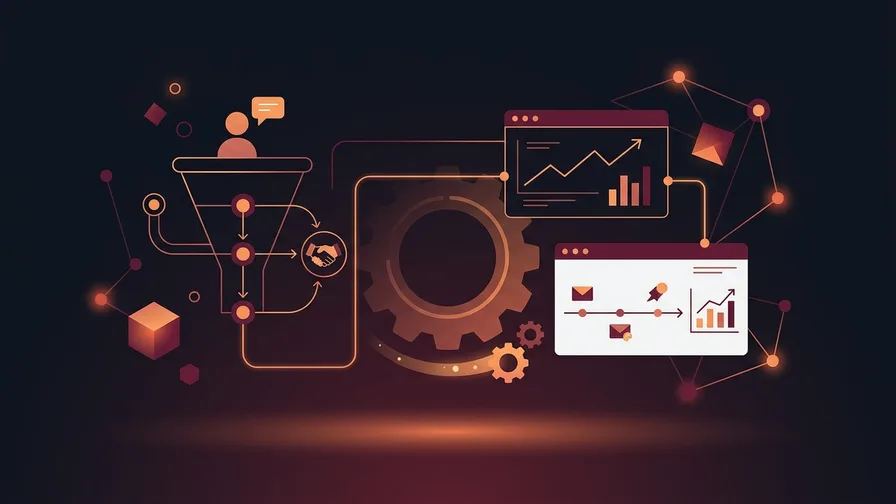
An instant acknowledgement. The moment somebody submits a form, they should get an automatic reply that confirms it arrived, says when they'll hear from a person, and gives them a phone number if they'd rather not wait. This one change buys you some breathing room, because the person isn't sitting there wondering whether the form worked. It doesn't buy unlimited time, and on an urgent job it buys very little, but silence is what sends people to the next company on the list.
A real alert to a real human. Not just an email. A text message or a phone notification that somebody will actually see, going to a specific named person rather than to a shared address.
A defined follow-up sequence. Write down what happens and when. Something like a call within the hour, a text if the call goes unanswered, an email the next morning, and a final check-in three days later. The specific cadence matters far less than having one that exists on paper rather than in somebody's head.
Free Consultation
Ready to get more from your marketing?
Book a free call and we'll look at what's working, what's not, and where to focus next.
Book a Free CallOne place where every enquiry is recorded. A spreadsheet is a legitimate answer here. What matters is that you can look at a list and see who hasn't been contacted, not that the tool is sophisticated.
Do you actually need a CRM?
Probably eventually, and probably not as urgently as the software companies would like you to believe.
If you're taking fewer than about ten enquiries a week and one person handles all of them, a shared spreadsheet with columns for date, name, source, status and next action will do the job. The failure mode of a CRM at that scale is that nobody updates it, and a CRM nobody updates is worse than a spreadsheet everybody does.
The signals that you've outgrown the spreadsheet are fairly clear. More than one person is handling enquiries. You've started losing track of who followed up with whom. You can't answer the question of how many enquiries turned into jobs last quarter. Or you're spending real money on ads and can't tell which channel produced the work.
At that point the value of a CRM isn't the software features. It's that it forces a single shared definition of what a lead is and what stage it's at. Pick something simple, because the best CRM is the one your team will actually use on a bad day.
Marketing automation is the same story. Automate the acknowledgement and the alert first, because those come closest to pure gain, as long as the acknowledgement promises a response time you can actually meet. Be much more careful about automating the actual conversation. An automated nurture sequence sent to somebody who wanted a quote for a leaking roof reads as an insult.
What to measure
Three numbers tell you almost everything about whether this is working.

First, time to first response, measured from when the enquiry arrived to when a human made contact. Most businesses have never measured this and are shocked by their own median. Second, contact rate, meaning the share of enquiries you actually reached at all. Third, the share of enquiries that turned into booked work.
You want these by source, because a lead from a Google search and a lead from a referral behave completely differently and averaging them together hides the story. Referrals forgive slowness. Somebody who found you in a search and messaged three of your competitors does not.
If you already track where your leads come from, you're most of the way there. If you don't, that's the more urgent gap, because without it you're optimising a process you can't see.
Frequently Asked Questions
How fast should I respond to a new lead?
As close to immediately as your business realistically allows, with an automatic acknowledgement covering you in the meantime. The research most often quoted here found meaningfully better qualification rates for contact within an hour compared to later, and while the specific multipliers get exaggerated in retelling, the direction is consistent and matches how people actually shop.
Is an automatic email reply enough?
No, but it buys you time. An instant acknowledgement stops the customer wondering whether the form worked and reduces the chance they immediately contact a competitor. It doesn't replace a human getting in touch.
How many times should I follow up before giving up?
More than once, which already puts you ahead of most. A workable default is a call, then a text, then an email the next day, then a final check-in a few days later. The point is that it's written down and happens consistently rather than depending on who remembers.
Do I need a CRM for a small business?
Not immediately. Under roughly ten enquiries a week with one person handling them, a well-maintained spreadsheet works. Move to a CRM when multiple people are involved, when follow-ups start slipping, or when you can't answer how many enquiries became jobs.
What's the difference between speed to lead and marketing automation?
Speed to lead is about how quickly a human makes real contact after an enquiry. Marketing automation is the broader set of sequences that nurture people over time. Automation can support speed to lead by handling the acknowledgement and the alert, but it doesn't replace the conversation.
How do I know if I'm losing leads?
Submit your own form and see what happens, including how long it takes and where the notification lands. Then compare the number of enquiries your analytics recorded last month against the number your team can actually account for. A gap there is a starting point rather than a verdict, because analytics counts form submissions in the browser, so it can include spam and bot entries while missing anything nobody set it up to track. Check it against your form provider's own records before you conclude leads are going missing.
If you're spending on ads or search and you're not sure what happens to the enquiries once they arrive, that gap is usually cheaper to fix than buying more traffic. It's the kind of thing worth walking through properly, from the form on your site to the alert to whoever picks up the phone. Book an introductory call and we'll map out where your enquiries are going and what it would take to stop losing them.