October 27, 2026
How to Rank Higher on Google Maps: What You Can and Cannot Control
TL;DR
Google says the map pack comes down to relevance, distance and prominence, and keeps the rest confidential. Here's what's confirmed, what local SEO professionals rate highly, why your website matters more than your profile description, and what you can't change at all.
In This Article
You search for your own business from the front desk and there you are, first in the map. A customer two kilometres away searches the same thing and you're nowhere in the top three. That doesn't necessarily mean anything is broken. It's how Google's map results are designed to work.
There's no single map ranking. The three local businesses Google shows beside the map, often called the map pack, change with what was searched and where the person searching is, or where Google thinks they are. So the useful question isn't "how do we get to number one?" It's "how often do we show up for the searches that matter, across the area we serve?"
Here's what affects those results, and what the evidence tells us about each one. Google publishes very little about local ranking, so we've labelled where each point comes from.
- Google says means it's in Google's own help documentation.
- Rated highly in the survey means it ranks near the top of Whitespark's 2026 Local Search Ranking Factors survey, where 47 local SEO professionals scored 187 factors. That's informed opinion from people who do this work every day, not proof, and as the survey notes, none of them have inside access to Google's algorithm. All the rankings we quote come from its table for local map results, which ranks factors differently from its tables for regular search results and AI search.
- Not confirmed by Google means Google hasn't said it's a ranking factor. Where the survey rates it, we say so.
- Consumer survey means BrightLocal's 2026 Local Consumer Review Survey, which asks people how they use reviews when choosing a business. It says nothing about rankings, but it tells you what the person reading your profile cares about.
What Google says decides the map pack
Google's help page on local ranking says local results are mainly based on relevance, distance and popularity. It then explains them under three headings: relevance, distance and prominence. It also says there's no way to request or pay for a better local ranking, and that it keeps the algorithm details confidential.
Relevance is how well your Business Profile matches what someone searched for. Distance is how far you are from the person searching, or from where Google thinks they are if they haven't shared a location. Prominence is how well known your business is, which Google says is based partly on how many websites link to you and how many reviews you have. Google's own words are that more reviews and positive ratings can help your local ranking.
Those are the main factors Google names, not a full description of its algorithm. We use those three buckets to organise the rest of this article, though some survey factors don't fit neatly inside any of them. The honest way to read them is that you can influence relevance and prominence, while distance is mostly fixed.
Why your website matters for the map
This is the part business owners question most often, so it's worth taking first. If what you care about is the map pack, why would anyone spend time on your website copy and page titles?
Because your Business Profile isn't the only thing in play. Google says one thing that involves your website, which is that prominence is based partly on how many websites link to your business. It doesn't say it reads your page copy. That part is rated highly in the survey, where six of the top 25 factors relate to your website, several of them to the page your Business Profile links to.
- Your name, address and phone number on the site matching your profile (ranked 15th)
- Keywords in that page's title tag, the page title Google often shows in search results (17th)
- Content that's relevant to your city or neighbourhood (18th)
- Keywords in the page's headings (20th)
- A dedicated page for each service you offer (24th)
- The quality of links pointing to that page (25th)
Put plainly, a homepage that says "quality care for the whole family" gives Google very little to match. A page that names your neighbourhood, lists the services you provide and has a separate page for each one gives it a lot more. The same page also helps the person reading it decide whether to call you, which is worth doing whatever it does for rankings.
As for links, the ones that make sense for a local business come from real relationships, such as your chamber of commerce, a supplier or partner who lists you, a local event you sponsor, or a news story about something you did. Keeping your name, address and phone the same on the other places people find you, such as Apple Maps, Bing Places and Yelp, is good practice too, though the survey rates those directory listings well below the top factors. Our guides to earning links from local websites and business listings on other websites go into both.
Separate pages only help when each one has something real to say. A stack of near-identical pages that swap in a different town name can fall under what Google's spam policies call doorway abuse, which specifically includes pages aimed at different cities that funnel visitors to the same place. It won't help a customer either.
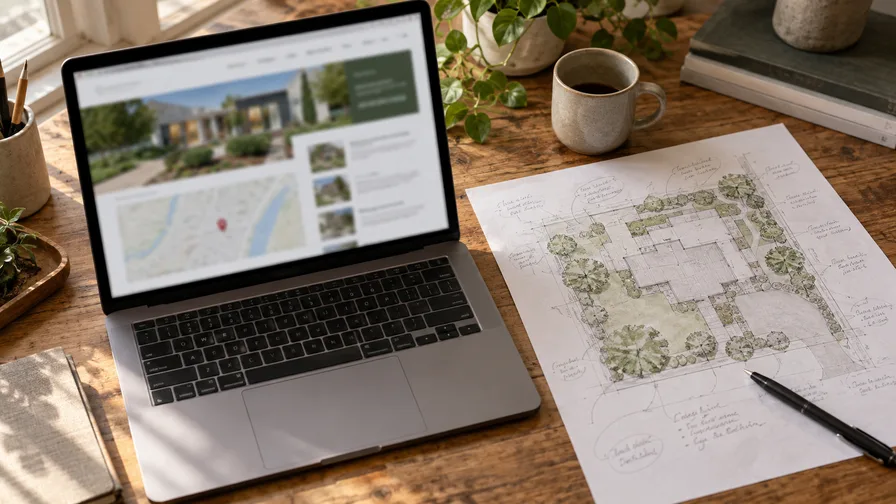
Two cautions. Not every website change will affect your map ranking, and nobody can promise that rewriting a title tag will move you up a spot. And the survey ranks keywords in your Business Profile description almost at the bottom of the list, 171st out of 187. If you've been polishing that description and ignoring your website, the effort is probably pointed the wrong way.
Reviews, and which parts of them count
Google says more reviews and positive ratings can help your local ranking. Google's ranking page doesn't mention review recency, review text or how fast reviews arrive.
The survey adds detail. A high star rating ranked 6th, the number of Google reviews with written text ranked 9th, how recent your reviews are ranked 11th, and a steady flow of reviews over time, rather than bursts, ranked 14th. Its author also notes that respondents now weight reviews more heavily than in previous editions.
Responding to reviews is a different case. Google says positive reviews and helpful replies can help your business stand out, which isn't a ranking claim, and the survey ranks owner replies only 122nd. Reply anyway. Someone comparing three businesses can read those replies, and a thoughtful one tells them a lot about how you treat people.
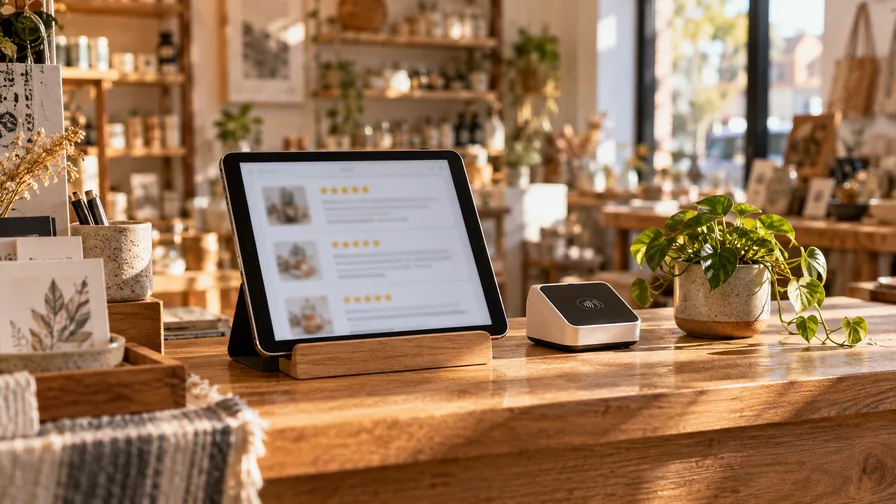
The consumer survey explains why this matters beyond rankings. In BrightLocal's 2026 survey of 1,002 American adults, 74% said they only care about reviews from the last three months, 47% said they won't use a business with fewer than 20 reviews, and 89% said they expect owners to reply. A profile with a handful of reviews from two years ago loses people even when it ranks.
So make asking for reviews a regular habit rather than a one-off push. Ask customers consistently after the work is done, rather than picking who to ask, send a plain link, and let them write what they like. Don't offer anything in return, don't filter out the unhappy ones, and don't ask people to mention particular words. All of that breaks Google's rules for user reviews, and our article on online reputation management covers how to run the process properly.
If you run a healthcare practice or another regulated business, follow the privacy rules for your profession. As a rule of thumb, a public reply shouldn't confirm that someone is a patient or client, or mention anything about their care.
Categories, and the business name trap
Google says your categories tell it what kind of business you are, and Google's guidelines for representing your business ask you to use as few as possible, as specific as possible, and to describe what your business is rather than what it has.
In the survey, your primary category is the single most important factor, ranked first of all 187, and additional categories ranked 8th. If your primary category is too broad, or describes a side service rather than your main business, that's one of the first things worth checking. Our Google Business Profile guide walks through choosing them.
Free Offer
Want to know what's hurting your website?
We'll review your site and tell you exactly what to fix, no strings attached.
Get Your Free AuditThe same survey ranked keywords in your business name third. That's the trap. You'll see businesses with "Best Dentist Toronto" or a city name tacked onto their profile name, and some of them rank well. But Google's guidelines say your profile name should reflect your real-world name, as used on your storefront, website and stationery, and that adding unnecessary information can get the profile suspended. A suspension can take your listing off the map and lock you out of managing it, so whatever the shortcut gains, it puts the whole listing at risk. Use your real name, even when a competitor appears to get away with it. If a competitor's name clearly breaks the guidelines, you can use the "Suggest an edit" option on their profile, or Google's Business Redressal Complaint Form, which is for reporting misleading business information, for repeated or serious cases. Stick to documented violations. The survey ranks removing spam listings 19th, but Google hasn't said it improves your ranking.
The survey ranked being open at the time of the search 5th, and having proper hours set on your profile 21st. That's a reason to keep hours and holiday hours accurate, not to claim hours you don't keep. Google also says businesses that operate only by appointment shouldn't list hours at all.
Distance is mostly out of your hands
Google says distance is a factor, meaning how far each business is from the person searching. The survey ranks it second of 187, and having a physical address in the city being searched ranked fourth. It also ranked how close your address is to the centre of the city 12th, which is one reason a business on the edge of town can struggle with searches that include the city name.
No amount of copywriting, reviews or profile editing changes the physical distance between your business and wherever the search is coming from. That's often why you'll see yourself ranked well near your office and less often farther out, and why a competitor across town can outrank you in their own neighbourhood. A closer business still needs to be a good match, though, so distance doesn't settle it on its own.
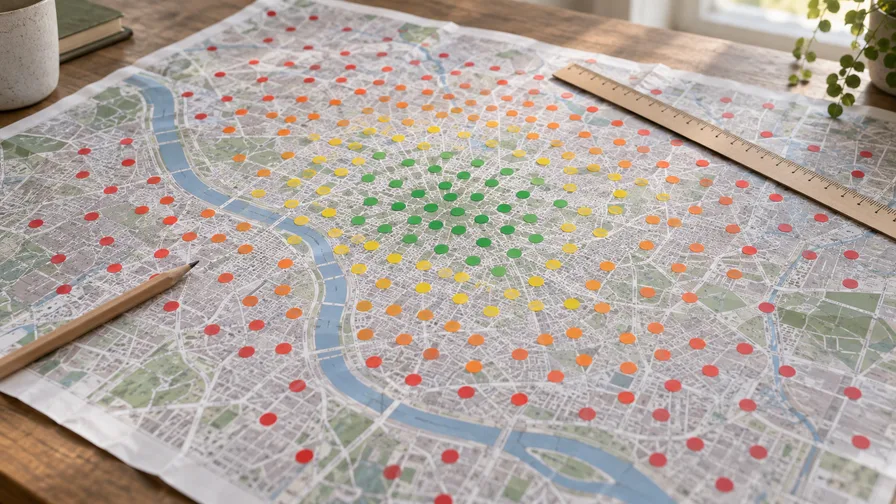
What you can control is accuracy. Make sure your map pin sits on your real location, which the survey ranked 10th. What you shouldn't do is fake being closer than you are. Google's guidelines say a virtual office, meaning a mailing address you rent but don't operate from, isn't eligible for a Business Profile, and an office in a co-working space only qualifies if it has clear signage, receives customers during business hours, and is staffed during those hours by your own team. Using an address that doesn't meet those rules to appear closer to customers puts the profile at risk of suspension.
Because the results change with location, one search from your office tells you very little. A geogrid rank tracker is a tool that runs the same search from a grid of points around your business and shows where you appear and where you don't. It's still a sample, not every customer's view, but it's a far more useful picture. Our guide to tracking local SEO progress covers what to watch.
What hasn't been shown to move the map
Some popular advice has little support. None of this means these things are useless, only that they shouldn't be sold to you as something that improves your ranking.
- Google Business Profile posts. Not in Google's ranking explanation, and the survey ranks post frequency 148th and post quantity 168th. They can help a customer choose you, which is reason enough to use them. We covered this in Do Google Business Profile Posts Affect Your Rankings?
- Keywords in your profile description. The survey ranked this 171st of 187. Write the description for people, since it still helps someone understand what you do.
- How people interact with your listing. This is the exception on this list. The survey ranked click-through rate, meaning the share of people who click your listing after seeing it, 13th, and respondents think these signals are growing in importance, but Google hasn't confirmed using them. Your profile's performance report shows interactions such as calls, website clicks and direction requests, and those are useful for judging interest, not for explaining a ranking change.
- Buying reviews, rewarding reviews, or only asking happy customers. These aren't overrated tactics, they're violations of Google's review policy, and Google removes reviews and can restrict profiles over them.
What a sensible monthly routine looks like
Most of the work is unglamorous upkeep. It splits roughly into what you handle and what your SEO provider handles.
You keep hours, holiday hours, phone number and services accurate the moment anything changes, rather than waiting for a monthly check. You ask customers for reviews consistently, without picking who to ask, and reply to new reviews promptly.
Your SEO provider tracks a fixed set of searches from several points across your service area, so changes are measured consistently. They check the profile for edits you didn't make, since Google and the public can suggest changes. They keep the website pages your profile relies on clear about where you are and what you offer, and they fix problems when they appear rather than producing busywork.
Nobody can guarantee you stay in the map pack. Competitors move, Google changes its layout, and searchers move around. What a steady routine does is keep the parts you control in good shape.
Frequently Asked Questions
We have more reviews than a competitor. Why are they above us?
Reviews are one part of prominence, and prominence is one of three factors. A competitor can outrank you because they're closer to the person searching, because their primary category is a better match for that search, or because their website and links do more work. The survey also ranks review recency and rating, not just total count.
Why do I see different results from my staff or customers?
Mostly because of location. Someone two kilometres away can see a different set of businesses, and a phone using GPS often places a searcher differently from a laptop on office Wi-Fi. A place name typed into the search, such as a neighbourhood, also changes which businesses count as close. Searching from your own office only shows you one spot on the map.
Will changing my website affect my Google Maps visibility?
It can. Google says prominence is based partly on how many websites link to your business, and the survey ranks several website factors highly, including consistent contact details, title tags, local content and dedicated service pages. Nobody can promise a specific change will move you up, but a clear, locally specific site is part of the foundation.
Can anyone guarantee that we stay in the map pack?
No. Google says there's no way to request or pay for a better local ranking, and results vary with each searcher's location. Be wary of anyone who guarantees a map position.
Our map visibility suddenly dropped. What should we check first?
Check whether your profile is still visible on Google and hasn't been suspended, whether anyone has edited your categories, hours or address, and whether a batch of reviews has disappeared. Then check whether a new competitor has opened nearby. Run the same searches from a few locations before drawing conclusions from one result.
We work at customers' locations and don't show our address. Does that hurt our ranking?
Possibly. The survey ranks a visible address 7th. But Google's guidelines only let you show an address where you serve customers in person and the location is staffed. If you only work at customers' locations, a service area with the address hidden is the correct setup. Google also says your service area shouldn't extend more than about two hours' drive from your base, though it allows larger areas for some businesses, and a displayed address needs permanent signage. Faking a storefront isn't worth the suspension risk.
If you're not sure whether the weak spot is your Business Profile, your reviews or your website, that's what our free website audit is designed to look at. It looks at your Google Business Profile, your local search visibility, your website's performance, how you show up in AI search, and whether the site gives visitors a clear reason to get in touch. You'll come away with a clearer idea of what to tackle first. Request your free website audit here.