August 26, 2025 · Updated September 26, 2026
Why SEO and Web Design Need to Work Together (and What Happens if They Don't)
TL;DR
SEO and web design are often handled separately. That's a mistake. When they work together, your site has a better chance to rank and convert. When they don't, you get traffic that bounces or rankings that never come.
In This Article
Key Takeaways
- SEO and web design aren't separate projects. They're two sides of the same coin.
- A slow, confusing, or clunky site will hold back even the best SEO campaign.
- Google ranks your site based on its mobile version, and Core Web Vitals (how fast and stable your pages feel) are part of its ranking systems.
- Good design + SEO means you get found online and turn visitors into customers.
- The smartest move? Build your site with SEO baked in from day one.
Think about your website for a second.

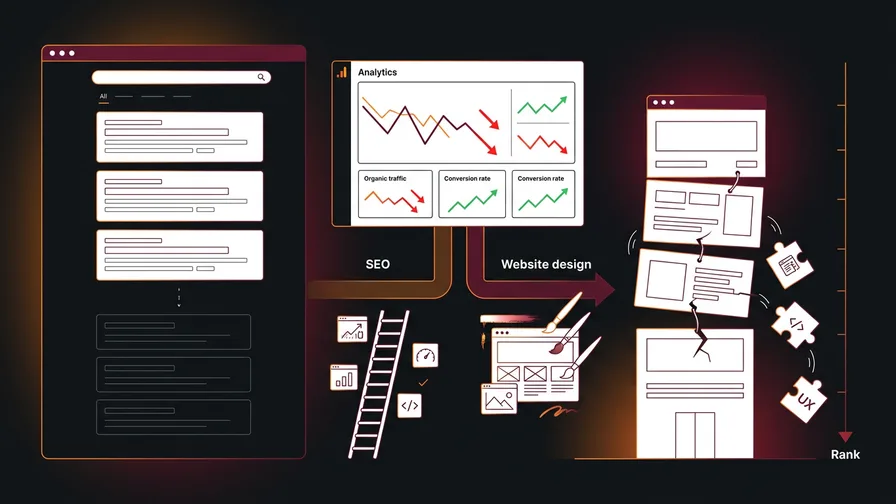
It's not just an online brochure. It's the place prospects go to decide if they should trust you, call you, or buy from you. Now here's the kicker. Even if you pour money into SEO to get more traffic, a poorly designed website will scare people off. On the flip side, a gorgeous design without SEO is like building a beautiful store in the middle of the desert. Nobody will find it.
That's why web design and SEO can't live in separate silos. They need to work together.
If you want to see how that looks in practice, our website design services page lays out exactly how we build sites that don't just look good, but also perform well in search.
How Website Design Affects SEO (and Vice Versa)
Here's the thing. Google doesn't just look at your words, it looks at your entire site. And people do the same.
- Structure matters. If your navigation is a mess, search engines can't crawl your site properly, and visitors can't find what they need.
- User behaviour matters. If people land on your site and leave right away because it's confusing, you lose the lead, and a page that doesn't satisfy searchers rarely holds its ranking for long.
- Design choices matter. Intrusive pop-ups, slow-loading images and a cluttered layout frustrate visitors, and slow pages can hurt your Core Web Vitals.
Want to see the technical side of how this works? Check out our guide on Common Technical SEO Issues and Fixes.
Common Mistakes When SEO and Design Don't Work Together
Mistake 1: Overly Visual Designs That Slow Down Site Speed
We've all seen them. Big, flashy websites with full-screen sliders and heavy graphics. They look great in theory but take forever to load. Here's the truth. The slower your site loads, the more people leave before it finishes, especially on mobile. That costs you leads, and slow pages can drag down your Core Web Vitals, which Google uses in ranking.
If you're curious about fixing this, we put together some easy tips in 6 Tips How to Increase Your Website Page Speed.
Mistake 2: Ignoring Mobile Responsiveness
These days, a large share of people browse on their phones. If your site looks broken or hard to use on a small screen, they won't stick around. Google also ranks you based on your mobile version first, so if that experience is poor, you'll slip in the search results.
Want to see why mobile matters so much? Have a look at Boost Local Rankings With Mobile Optimization.
Free Offer
Want to know what's hurting your website?
We'll review your site and tell you exactly what to fix, no strings attached.
Get Your Free AuditMistake 3: Poor Navigation and Site Architecture
If someone has to click five times just to find your phone number, they're gone. And if search engines can't crawl your pages easily, your SEO efforts go to waste. Clear, simple navigation is key for both humans and Google.
Mistake 4: Neglecting On-Page SEO During the Build
We still see this all the time. Beautiful sites that are missing basics like clear headings, title tags, or room for real content about your services. Without those, even the prettiest design struggles to rank.
That's why our Search Engine Optimization (SEO) service is built to work hand-in-hand with design.
Best Practices for SEO-Friendly Web Design
Build for Speed from the Start
Don't treat speed as an afterthought. Compress images, keep your code clean, and choose decent hosting. Your visitors will thank you, and so will Google.
- If you want the bigger picture, check out What Are Core Web Vitals and How Do They Affect SEO?.
Design with Mobile in Mind
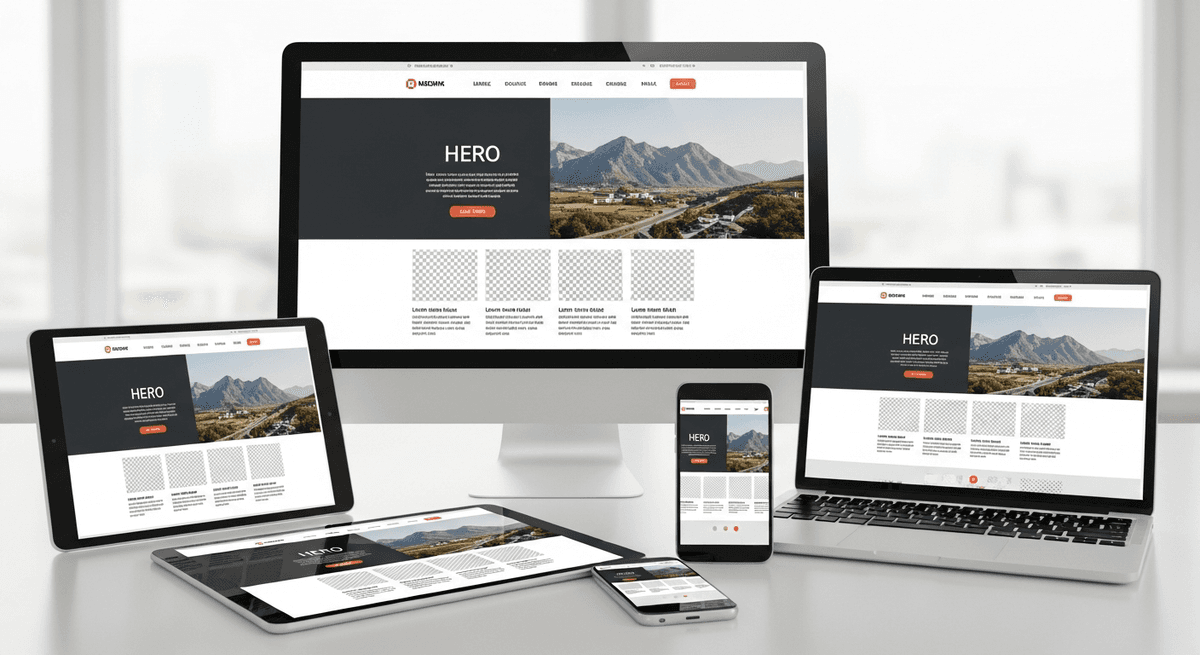
A modern website is designed for mobile first. That means responsive layouts, thumb-friendly buttons, and tap-to-call phone numbers.
Create Clear Site Architecture
Think of your site like a map. The easier it is to navigate, the happier your users (and Google) will be. Organize your pages logically and avoid burying important content too deep.
Pair SEO and Design From Day One
Your design should leave space for headlines, subheads, keyword-rich copy, and calls-to-action. That way your site doesn't just look nice. It works hard to convert visitors into leads.
The Business Impact of Keeping SEO and Web Design Separate
Let's be real. Separating SEO and design costs you money.
- Poor rankings mean fewer people find you.
- Poor user experience means fewer people contact you.
- And in the end, you've spent money on a site or an SEO campaign that doesn't deliver.
When SEO and design work together, the results compound. You get found, people stick around, and more of them take action.
FAQs About SEO-Friendly Web Design
Q: Do I need to redesign my site to improve SEO?
Not always. Sometimes simple fixes, like improving speed or making your site mobile-friendly, go a long way. But if your site is outdated or built on old tech, a redesign might save you more time and money in the long run.
Q: What's more important: SEO or design?
Neither. They're equally important. Design makes people comfortable enough to get in touch. SEO makes sure they find you in the first place. One without the other doesn't work.
Q: How do I know if my site is holding back my SEO?
Check your analytics. If you have a low engagement rate in GA4, or you're not getting leads despite traffic, your site design could be the problem.
Final Thoughts: SEO + Web Design = Growth
Your website should be your hardest-working salesperson, but only if it's designed to be found and built to convert. When SEO and design work together, you don't just get more traffic, you get more customers.
If you're not sure whether your website's design is helping or hurting your search rankings, get a free website audit. We'll look at both the design and the SEO side and show you where the two aren't working together.