September 4, 2023
8 Ways to Boost SEO Rankings with Visual Content
TL;DR
Images, infographics, and videos do more than make your site look good. Used strategically, visual content improves time-on-page, earns more shares, and gives Google more reasons to rank you higher.
In This Article
The Power of Visual Content in SEO Strategy
Visual content is a potent tool in an SEO strategist's toolkit. With the right approach, it can significantly enhance user engagement, drive more traffic, and boost your SEO rankings. Visual elements like images, infographics, videos, and other graphical elements can attract users and encourage them to spend more time on your site.

Here are actionable ways to use visual content to supercharge your SEO strategy.
1. Use High-Quality Images and Videos
Using high-quality images and videos enhances user experience, making your content more engaging and shareable. Additionally, search engines like Google prioritize high-quality content, which can improve your SEO rankings.
2. Optimize Image Sizes and Formats
While high-resolution images are desirable, they can slow down your site if not optimized. Serve modern formats like AVIF or WebP with a JPEG or PNG fallback, and compress every image so quality and loading speed stay in balance. Faster pages are easier for search engines to crawl and easier for visitors to stay on.
3. Implement Alt Text and Descriptive File Names
Alt text and descriptive file names enhance your images' SEO value. Alt text helps search engines understand the content of your images, boosting your visibility in image search results. Similarly, descriptive file names provide additional context to search engines, improving your SEO.
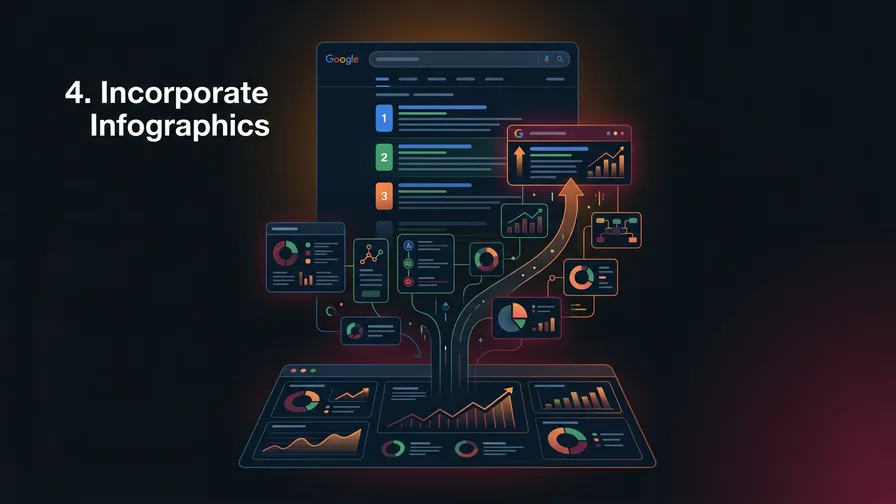
4. Incorporate Infographics
Infographics are an excellent way to present complex information in a digestible format. They're highly shareable and can attract backlinks, driving more traffic to your site and improving your SEO rankings.
5. Use Video Content
Video content can significantly increase user engagement and dwell time, both important ranking factors. Ensure to optimize your videos with SEO-friendly titles, descriptions, and tags.
6. Utilize Social Media Platforms
Social media can amplify the reach of your visual content. Sharing your visuals on platforms like Instagram, Pinterest, and Facebook drives more traffic to your site and strengthens your overall SEO performance.
7. Integrate Visuals in Your Blog Posts
Integrating relevant visuals into your blog posts enhances the overall engagement of your content, resulting in longer dwell times and reduced bounce rates. By captivating your audience with compelling images or videos, you encourage readers to spend more time on your website, signaling to search engines that your content is valuable and relevant. These positive user signals can have a favourable impact on your SEO rankings, potentially boosting your website's visibility and organic search traffic.
Free Offer
Want to know what's hurting your website?
We'll review your site and tell you exactly what to fix, no strings attached.
Get Your Free Audit8. Embed Visual Content in Your Site's XML Sitemap
Embedding your images and videos in your site's XML sitemap helps search engines discover and index them, which makes them far more likely to surface in image and video search. That is an extra traffic channel most businesses leave sitting unused.
The Visual Revolution in SEO
Visual content is central to modern SEO. Businesses can optimize and effectively use visual content to enhance user engagement, drive more traffic, and achieve higher SEO rankings.

Visual content does more for SEO than most businesses give it credit for. When used effectively and optimized correctly, visual content can significantly enhance user engagement, increase dwell time, and improve your site's SEO rankings. By integrating these strategies, businesses can create a more compelling, engaging online presence, and achieve higher visibility in search engine results. If you want a complete SEO strategy that goes beyond visuals to cover technical optimization, content, and link building, that's exactly what we do for our clients.
Frequently Asked Questions
Does visual content help with SEO rankings?
Yes, indirectly but meaningfully. Visual content increases time-on-page and reduces bounce rate, both of which signal to Google that your content is valuable. Well-optimized images also appear in Google Image Search, creating an additional traffic channel.
What is alt text and why does it matter for SEO?
Alt text is a short description added to an image tag that tells search engines what the image shows. It helps Google index your images correctly and also improves accessibility for users with screen readers. Every image on your site should have a descriptive, keyword-relevant alt tag.
How do I compress images without losing quality?
Tools like Squoosh, TinyPNG, and Sharp (for developers) let you reduce file size significantly while keeping the image looking sharp. Aim to keep most web images under 100KB. Using the WebP format instead of JPEG or PNG also helps considerably with load speed.
Should I add videos to my website to improve SEO?
Yes. Embedded videos increase average session duration, which is a positive engagement signal. To maximize SEO value, add keyword-rich titles and descriptions, include a transcript, and consider hosting on YouTube so your content appears in both YouTube and Google search results.
Want to know how your site's visual content and SEO stack up right now? Request a free audit and we'll pinpoint exactly where images, video, and other content improvements can boost your rankings.