April 21, 2026
Dental Advertising That Fills Chairs

TL;DR
Most dental advertising wastes money because it targets the wrong people or sends them to the wrong place. Here's what works to get new patients calling your practice.
In This Article
Dental advertising isn't complicated, but most practices get it wrong. They throw money at Facebook boosts, run Google Ads with no landing page strategy, or rely entirely on word of mouth and hope. The result is either an empty budget or an empty waiting room. Sometimes both.
The practices that consistently fill chairs do a handful of things well. They show up when people are actively searching for a dentist. They build trust before someone ever picks up the phone. And they make it dead simple to book an appointment. Here's how that works in practice.
Google Ads: Show Up When People Are Looking
When someone searches "dentist near me" or "emergency dental care," they're not browsing. They need a dentist, and they need one soon. Google Ads puts your practice at the top of those results, right when intent is highest.

For most dental practices this is the fastest paid channel to produce booked appointments, which is why it usually earns budget ahead of other paid options. But running Google Ads well requires more than picking a few keywords and setting a daily spend.
What makes dental Google Ads work:
- Target the right keywords. "Dentist near me," "family dentist [your city]," "emergency tooth extraction," "dental implants [your area]." These are high-intent searches from people ready to book. Avoid broad terms like "dental health tips" that attract browsers, not patients.
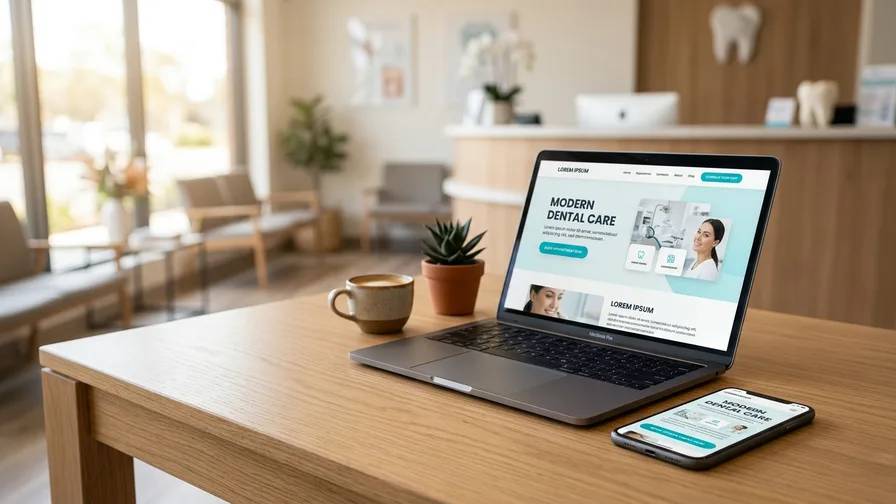
- Use a dedicated landing page. Sending ad traffic to your homepage is one of the most common mistakes. Build a page specifically for the service you're advertising, with a clear call to action, either call now or book online. If your dental practice website isn't converting visitors into patients, your ads are paying for clicks that go nowhere.
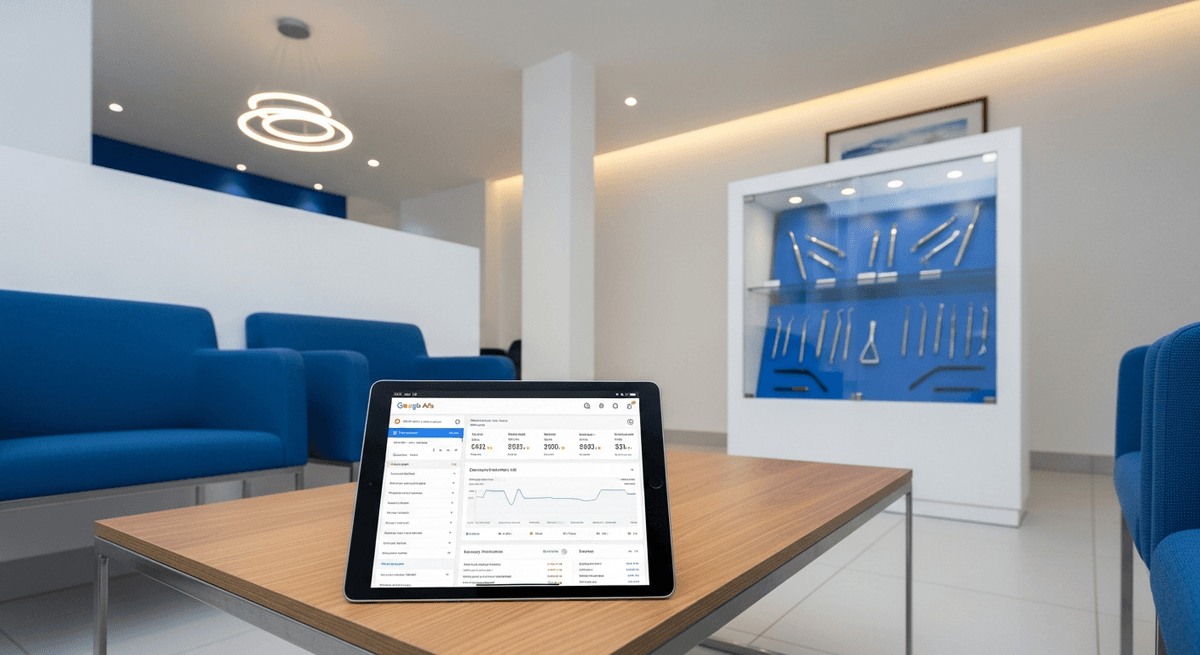
- Set a realistic budget. WordStream's 2026 Google Ads benchmarks put the average dental click at about $8 USD across US search campaigns, and competitive urban markets run well above that. A budget of $1,000 to $2,500 per month is a reasonable starting point for most practices. Track cost per new patient, not just cost per click.
- Track phone calls, not just form fills. Most dental patients call rather than fill out a form. Use call tracking so you know exactly which ads are generating phone calls and which are wasting money.
If you're running Google Ads without call tracking and dedicated landing pages, you're flying blind. Fix those two things before increasing your budget.
Google Business Profile: The Free Listing That Drives Most Calls
Before we talk about paid advertising channels, let's talk about the one that's free and often drives more patient calls than anything else, your Google Business Profile (GBP).
When someone searches for a dentist in your area, Google shows a map pack with three local businesses before the regular search results. Getting into that map pack is one of the most valuable things you can do for your practice. Here's what it takes:
- Complete every field. Business name, address, phone, hours, services, insurance accepted, photos. Google favours complete profiles.
- Post regularly. Google Business Profile has a posts feature. Use it to share updates, promotions, or educational content at least once a week. It signals to Google that your listing is active.
- Add photos of your actual office. Real photos of your waiting room, treatment rooms, and team. Not stock photos. People want to see where they'll be sitting with their mouth open.
- Respond to every review. Good reviews, bad reviews, neutral reviews. Respond professionally to all of them. More on reviews below.
Your GBP listing is often the first thing a potential patient sees. If it looks neglected, they'll assume the practice is too. If you want to rank for "dentist near me" searches, your Google Business Profile is the foundation.
Reviews: The Trust Signal That Outweighs Everything Else
Reviews carry more weight in choosing a dentist than most practices expect. BrightLocal's 2026 Local Consumer Review Survey found 97% of consumers read reviews for local businesses before deciding. Your website and your ad copy still have to convert the visit once someone clicks, so treat the review profile as what earns the click rather than a substitute for the rest.
A practice with 200 Google reviews and a 4.8 rating will usually outperform a practice with 15 reviews and a 4.9 rating. Volume matters because it signals consistency, and people trust the larger sample size.
Building a strong review profile takes a system, not occasional effort:
- Ask every satisfied patient. After a cleaning or procedure, your front desk should have a simple process for requesting a review. A text message with a direct link to your Google review page works best.
- Make it easy. Create a short link or QR code that goes directly to the review form. Every extra step between the ask and the review costs you completions.
- Respond to negative reviews carefully. Don't get defensive. Acknowledge the concern, keep it professional, and offer to discuss offline. Potential patients read your responses to bad reviews more carefully than the reviews themselves.
We've written a detailed breakdown of Google review strategy for dental practices if you want the full playbook.
Social Media: Build Familiarity, Not Just Followers
Social media for dental practices isn't about going viral. It's about staying visible in your community so that when someone needs a dentist, your name comes to mind first.

The content that performs best for dental practices on social media:
- Smile galleries and case walkthroughs. Showcasing completed work, like a smile gallery of cosmetic cases or a walkthrough explaining how you approached a complex restoration, lets potential patients see the quality of your work firsthand. Keep the focus on the clinical process and results rather than patient endorsements.
- Team introductions. People want to know who'll be working on their teeth. Short videos or photos introducing your hygienists, assistants, and dentists make the practice feel approachable.
- Office tours and behind-the-scenes content. Show your sterilization process, new equipment, or a day in the life at the practice. It builds familiarity and trust before someone ever walks through the door.
- Educational content that's genuinely useful. Quick tips about flossing technique, what to do if a tooth gets knocked out, when to see a dentist vs. waiting it out. Helpful content builds trust.
- Community involvement. Sponsoring a local sports team, participating in a health fair, or supporting a charity event? Share it. It shows you're part of the community, not just advertising to it.
If you're running Facebook ads for your dental practice, use these same content types in your ad creative. Ads that look and feel like helpful social content outperform polished ad creative in this space.
Free Consultation
Ready to get more from your marketing?
Book a free call and we'll look at what's working, what's not, and where to focus next.
Book a Free CallOne important note. Don't spread yourself across every platform. Pick one or two where your local audience spends time (usually Facebook and Instagram for dental), and be consistent there. Three posts a week on two platforms beats one post a month on five.
Local SEO: Get Found Without Paying for Every Click
Search engine optimization for dental practices isn't about competing for national keywords. It's about showing up when people in your city or neighbourhood search for the services you offer.
The basics of local dental SEO:
- Dedicated pages for each service. Don't list all your services on one page. Create individual pages for dental implants, teeth whitening, emergency dental care, pediatric dentistry, and any other service you offer. Each page should target specific keywords people use when searching for that service.
- Location-specific content. If you serve multiple neighbourhoods or cities, create content that references those areas. "Family dentist in [neighbourhood]" is a much easier keyword to rank for than "family dentist" on its own.
- Consistent business information everywhere. Your practice name, address, and phone number should be identical across your website, Google Business Profile, Yelp, Healthgrades, and any other directory listing. Inconsistencies confuse search engines and hurt your rankings.
- A fast, mobile-friendly website. More than half of dental searches happen on phones. If your site is slow or hard to use on mobile, you're losing patients before they even see your services. If you're choosing a website designer for your dental practice, make sure mobile performance is a priority.
SEO takes time to build, but it delivers patients without ongoing ad spend. The best approach combines paid ads for immediate results with SEO for long-term, sustainable growth.
What NOT to Waste Money On
Not all dental advertising is worth the investment. Here's where practices commonly burn budget with little to show for it:
- Print mailers to massive areas. Direct mail can work for dental practices, but only when it's highly targeted. Blanketing a 50km radius with generic postcards is expensive and produces weak results. If you do direct mail, target new movers in your immediate area.
- Boosting random Facebook posts. Clicking the "Boost" button on a post with no targeting strategy, no clear offer, and no landing page is throwing money away. If you're going to spend on Facebook, set up proper campaigns through Ads Manager with defined audiences and conversion tracking.
- Advertising services nobody's searching for. Promoting niche procedures that represent 2% of your revenue while ignoring bread-and-butter services like cleanings, fillings, and emergency care means you're advertising to the smallest possible audience.
- Cheap SEO packages from overseas agencies. Nobody can guarantee a first-page position, so a $199/month offer that promises one is usually funding low-quality links that put your site at risk rather than real optimization work. Quality local SEO for a dental practice typically starts around $800 to $1,500 per month.
- Ignoring your website. No amount of advertising fixes a website that doesn't convert. If your dental website isn't converting visitors into patients, fix the site before spending more on ads.
Putting It All Together: A Practical Dental Advertising Plan
If you're starting from scratch or resetting your marketing strategy, here's the order that makes sense:

1. Fix your Google Business Profile. Complete it fully, add photos, and start actively requesting reviews. This is free and delivers results quickly.
2. Make sure your website converts. Clear calls to action, mobile-friendly design, online booking capability, and dedicated pages for your key services. If the website doesn't work, nothing else matters.
3. Launch Google Ads targeting high-intent keywords. Start with your most profitable services (implants, cosmetic work, emergency care) and expand from there. Use dedicated landing pages and call tracking from day one.
4. Build a consistent social media presence. Post regularly, share educational content and team highlights, and engage with your community. Add targeted Facebook or Instagram ads once you have a content rhythm established.
5. Invest in SEO for long-term growth. Build out service pages, create helpful content, and earn local citations. This compounds over time and reduces your dependence on paid advertising.
Frequently Asked Questions
How much should a dental practice spend on advertising?
A common planning range for dental practices is 5% to 10% of gross revenue on marketing, though the right number depends on how aggressively you are trying to grow and how competitive your area is. For a practice generating $1 million annually, that's $50,000 to $100,000 per year across all channels. Start with the highest-ROI channels (Google Ads and Google Business Profile optimization) and expand from there based on what's working.
How long does it take to see results from dental advertising?
Google Ads can generate calls within the first week of a well-structured campaign. Google Business Profile improvements typically show results within 30 to 60 days. SEO takes 3 to 6 months for meaningful organic traffic gains. Social media builds gradually over time. The fastest path to new patients is usually a combination of Google Ads and an optimized Google Business Profile.
Is Facebook advertising worth it for dentists?
Yes, but not the way most practices do it. Random post boosts with no strategy waste money. Targeted campaigns promoting specific services (like teeth whitening or new patient specials) to defined local audiences with proper landing pages can produce strong results. Facebook works best as a complement to Google Ads, not as your primary advertising channel.
Should I hire a marketing agency or do dental advertising myself?
It depends on your time and expertise. Day-to-day execution like posting to your Google Business Profile and keeping social media active can be carried in-house with some training, and plenty of practices start there. The layer underneath, meaning Google Ads management, SEO, and the profile and content strategy those posts are meant to serve, typically produces much better returns when handled by someone with experience, because the technical details and ongoing optimization significantly affect performance. The cost of a good agency is usually less than the cost of poorly managed campaigns.
What's the most important thing a dental practice can do for marketing right now?
If you had to pick one thing, get your Google review count up. A strong review profile improves your Google Business Profile ranking, increases click-through rates on your ads, and builds trust before someone visits your website. It's free, it's effective, and it compounds over time.
If you want a clear plan for your practice's advertising, book a call and we'll look at what you're currently doing, where the gaps are, and what would move the needle most. You can see how advertising fits with SEO and the website in our dental marketing services.