January 13, 2026
How to Track Your Local SEO Progress Without Getting Lost in Data
TL;DR
Most small business owners check their rankings once and then never look again, or obsess over numbers that don't matter. Here's what to actually measure and how often.
In This Article
Local SEO produces a lot of data. Google Search Console, Google Analytics, Google Business Profile Insights, rank tracking tools, review counts, citation scores. It can feel like a full-time job just keeping track of it all.
It doesn't have to be. The trick is knowing which numbers actually connect to revenue, and ignoring the rest. Here's a practical framework for tracking your local SEO without drowning in dashboards.
Start With Google Business Profile Insights
If you serve local customers, your Google Business Profile is one of the most important pieces of real estate you have. According to Google research, 76% of people who search for a local business on their phone visit that business within 24 hours, and 28% of local searches result in a purchase.

GBP Insights show you exactly how customers are finding and interacting with your profile:
- Search queries: What people actually typed to find you
- Direction requests: How many people asked for directions to your location
- Phone calls: How many clicked to call directly from your profile
- Website clicks: How many visited your site from the profile
Check these monthly. A steady increase in direction requests and phone calls is a clear signal that your local visibility is improving. A sudden drop is a signal that something changed, maybe your hours were updated incorrectly, a negative review came in, or a competitor improved their profile.
If you haven't fully set up your profile yet, our post on optimizing your Google Business Profile covers everything from setup to ongoing maintenance.
Set Up Google Search Console
Google Search Console (GSC) is free and gives you direct data from Google about how your website appears in search results. If you haven't set it up, do it this week. It takes about 20 minutes and requires verifying ownership of your site.
The reports that matter most for local SEO:
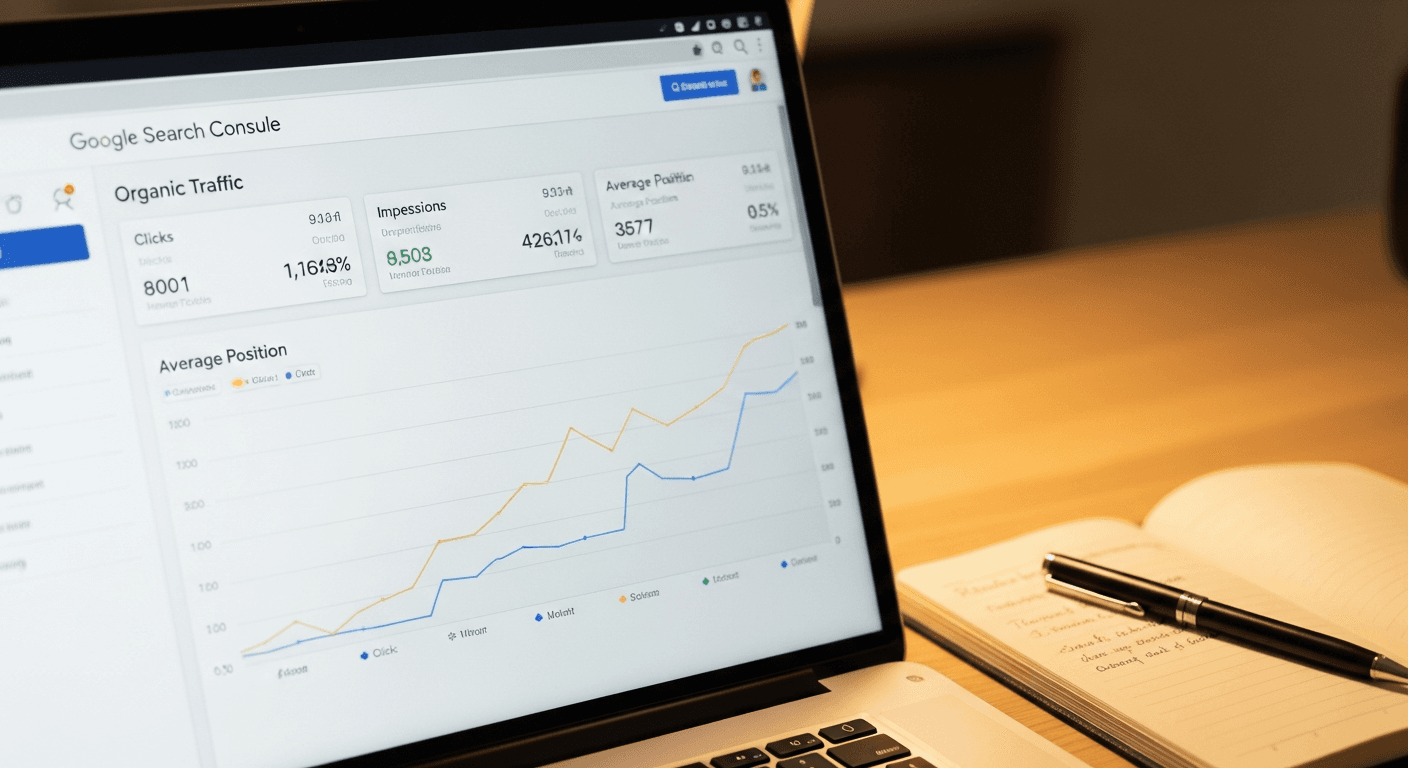
- Performance report: Shows which queries your site appears for, your average position, and how many clicks you're getting. Sort by impressions to find keywords where you're showing up but not getting clicked (usually means you're ranking on page 2 or 3).
- Coverage report: Flags any pages Google couldn't crawl or index. Errors here mean potential ranking opportunities are being missed.
- Core Web Vitals: Shows whether your pages pass Google's speed and usability thresholds. Failing pages are at a disadvantage in rankings.
Once a month is enough for most small businesses. You're looking for trends over time, not day-to-day fluctuations.
Track a Small Set of Target Keywords
Pick 10 to 15 keywords that matter most to your business. For a Hamilton plumber, that might be "plumber Hamilton," "emergency plumber Hamilton ON," and "drain cleaning Hamilton." For a Toronto accountant, it might be "small business accountant Toronto" and related searches.

Check where you rank for these once a month. You don't need expensive tools to start. A manual incognito search (to remove personalization) or a free rank checker gives you enough to track direction. Over time, you want to see these positions climbing, stalling, or slipping, and investigate accordingly.
Free Offer
Want to know what's actually hurting your website?
We'll review your site and tell you exactly what to fix, no strings attached.
Get Your Free AuditFor more systematic tracking, tools like SE Ranking, BrightLocal, or Semrush give you automated weekly rank tracking with historical graphs. If you're serious about local SEO, that kind of visibility is worth the investment.
Monitor Your Reviews and Ratings Consistently
Your Google rating directly affects whether people click on your profile. More than half of consumers won't use a business rated below 4 stars, according to BrightLocal's Local Consumer Review Survey.
Track these monthly:
- Total review count (is it growing?)
- Average star rating (is it stable or drifting?)
- Your response rate (are you replying to all reviews?)
- Any new negative reviews that need a professional, calm response
Reviews are a ranking signal for local SEO and a trust signal for potential customers. Both matter. Read our post on how to get more Google reviews for a repeatable system that works.
The One Monthly Check-In That's Enough
If you can only spend 30 minutes a month on tracking, here's what to do:

- Log into Google Business Profile Insights and note direction requests, calls, and website clicks vs. last month
- Log into Google Search Console and scan the Performance report for any dramatic changes in clicks or impressions
- Check your Google rating and review count vs. last month
- Do a quick search for your top 3 keywords in an incognito window and note your positions
That's it. If something looks off, investigate further. If things are steady or improving, you're on track. Don't let perfect be the enemy of done.
Frequently Asked Questions
How long does local SEO take to show results?
Most businesses see noticeable movement in 3 to 6 months, with significant results in competitive markets often taking 6 to 12 months. The work you do in month one pays off in month four. That's not a reason to delay. It's a reason to start now.
Should I use a rank tracking tool?
For businesses serious about SEO, yes. Manual checks work to start, but they're time-consuming and don't give you historical data. A rank tracking tool lets you see the trend clearly over months, which is far more useful than a single snapshot. The cost is usually $30 to $100 per month depending on the tool and your keyword volume.
What's the most common local SEO mistake small businesses make?
Ignoring the Google Business Profile. Most businesses set it up once and never return. Regular posts, prompt review responses, accurate information, and regular photo updates all contribute to rankings. Businesses that treat GBP as a set-and-forget listing are leaving local visibility on the table.
If you'd like us to take a look at your current local SEO setup and tell you where the biggest opportunities are, request a free audit and we'll give you a clear picture of where things stand.