December 9, 2025
How Much Does a Dental Practice Website Cost in Canada? (2026 Pricing Guide)

TL;DR
A new dental practice website in Canada ranges from $3,000 to $50,000+, and the price difference is bigger than most agencies will admit. Here's an honest breakdown of what each tier delivers, what to budget for hidden costs, and how to decide which level your practice actually needs.
In This Article
Dentists shopping for a new website get quotes from $1,500 to $50,000 for what sounds like the exact same project. That gap isn't a typo. It's the difference between a templated platform with your photos swapped in and a fully custom website built around how your practice actually runs.
The trouble is, most agency pricing pages don't tell you what changes between tiers. So you end up either overpaying for features you don't need or underpaying for a site that doesn't convert visitors into patients. Here's a clear breakdown of what dental practice websites actually cost in Canada in 2026, what each tier gets you, and the hidden costs that catch most practices off guard.
If you're a US dentist reading this, the structure here applies on both sides of the border. Most Canadian dollar figures convert to USD at roughly 0.72 to 0.77x at current exchange rates. US-based template platforms are labeled in USD explicitly. We work with practices in both markets.
Here's a note on the numbers. The price ranges in this article are ballpark observations from current Canadian dental web design market conditions, not published authoritative benchmarks. Treat them as planning anchors and verify against current quotes from the agencies and freelancers you're evaluating.
The Honest Range: $3,000 to $50,000+
That's the broad Canadian range for a new dental practice website in 2026. Below $3,000 you're usually buying a templated platform subscription rather than a site you own (with a few exceptions where a freelance developer delivers a basic owned WordPress build for $1,500 to $4,000). Above $50,000 you're either getting a multi-location build, a custom application (online booking + patient portal + intake forms), or you're overpaying.
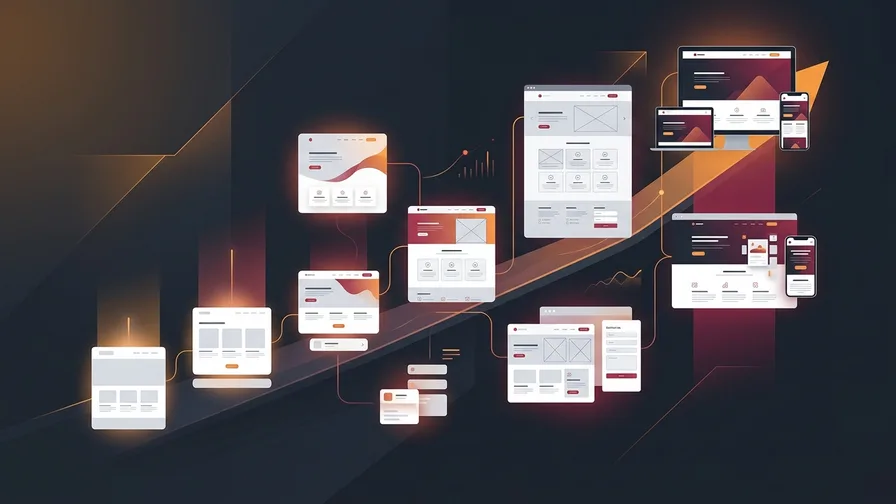
The realistic mid-band for a single-location general practice in 2026 is $10,000 to $22,000 CAD. That's enough to get a properly designed, custom-feeling site with accessibility, online booking integration, and local SEO foundations, without paying for features you don't use.
Here's where the money actually goes by tier.
Tier 1: Template Platforms ($1,500 to $5,000)
This is the bottom of the market. You're not really buying a website at this tier, you're subscribing to a platform that hosts and updates a templated dental site with your photos and copy plugged in.
The main players in this space are US-based platforms like ProSites, Smile Marketing, and PBHS. They generally price in USD with recurring monthly fees (often around $150 to $450 USD per month, or roughly $200 to $620 CAD) plus a one-time setup fee. Over a 3-year ownership cycle, that often adds up to $7,000 to $22,000 USD total even though it feels cheap month-to-month.
What you actually get:
- A templated design chosen from a small library. Your colours and photos swap in. Layout, structure, and component library are shared with hundreds of other dental practices on the same platform.
- Basic SEO setup with standard service pages and meta tags. Performance is similar to every other practice on the platform, which means little local SEO advantage.
- Hosting and standard maintenance bundled into the monthly fee. You don't own the site or the code, so you can't take it elsewhere without rebuilding.
- Minor content updates through a templated CMS or a support ticket. Larger changes usually require a paid add-on.
This tier works for a brand-new practice that needs a site live in 2 weeks with the lowest possible upfront cost. Or an established practice that's purely using the website as a digital business card and gets most patients through referrals.
It doesn't work for any practice that wants the website to actually generate new patients. Templated sites struggle with conversion because they're designed to fit every practice instead of being tuned to yours. And because you don't own the site, the long-term math gets bad fast.
Tier 2: Semi-Custom Builds ($10,000 to $18,000)
This is where many of the Canadian dental practices we work with land. A semi-custom build means a custom design layered on a flexible CMS like WordPress, Webflow, or a modern headless setup. The structure and components are tailored to your practice, but the underlying tech stack is well-known and easy to maintain.
What's typically included at this tier:
- Custom homepage and key service pages designed around your practice, your photos, your services, and how patients actually find and book you. Not a template.
- 5 to 10 dedicated service pages for the procedures that drive new patients (Invisalign, implants, emergency dentistry, family dentistry, cosmetic, sedation). Each one targets specific search intent rather than generic "Services" pages.
- Local SEO foundation including proper schema markup, location pages if you serve multiple neighbourhoods, optimized meta tags, and a fast mobile-first build.
- Online booking integration with whatever software you use (LocalMed, Modento, Yapi, Solutionreach, NexHealth, or similar). Plus contact forms with proper validation and lead tracking.
- AODA-aligned accessibility which is legally required in Ontario for practices with 50 or more employees, and considered best practice everywhere else so all patients can actually use your site. Costs more to do properly than most agencies admit.
- You own the site. The code, the content, the domain, the analytics. You can move it to a different agency without rebuilding.
Timeline is typically 6 to 10 weeks from kickoff to launch. Ongoing costs after launch are roughly $50 to $200 CAD per month for hosting, security, and basic maintenance.
For most single-location general practices doing $750K to $2M in annual production, this is the right tier.
Tier 3: Fully Custom Builds ($20,000 to $50,000+)
Fully custom builds make sense for specific situations: multi-location practices, specialty clinics with unique workflows (full-arch implant centres, orthodontic groups), or practices that need a built-in patient portal, custom intake forms, or workflows that go beyond what an off-the-shelf booking system provides.

What changes at this tier:
- Bespoke design with custom illustrations, photography direction, and interactive elements that reinforce your brand. The site looks and feels distinct, not just polished.
- Custom integrations with your practice management software, billing platforms, or referral networks. Often involves API work or a dedicated patient portal.
- Multi-location architecture if you have 2 or more locations. Each location gets a dedicated page with its own ranking signals, while the brand remains consistent.
- Content systems for ongoing publishing, with internal-link automation, custom blog templates, and structured content for procedures.
- Performance and SEO audits baked into the build process rather than added as an afterthought.
Timeline is 12 to 20 weeks. Ongoing costs are higher, typically $150 to $500 CAD per month for hosting, maintenance, and minor design updates.
Free Consultation
Ready to get more from your marketing?
Book a free call and we'll look at what's working, what's not, and where to focus next.
Book a Free CallIf you're a single-location general practice and someone is quoting you $30,000+ without a clear case for custom features, push back. Most general practices don't need this tier.
What Changes Between Tiers (And What Doesn't)
The thing that surprises most dentists is what doesn't scale with price.
- Page count. A $5,000 template site might have 30 pages. A $25,000 custom site might have 15. More pages aren't better. Targeted pages that match real patient search intent are better.
- "Modern" design. A well-designed templated site can look as polished as a custom build. The difference is whether the design is built around your practice or whether your practice is forced into a template.
- SEO performance ceiling. Templates can rank, especially for low-competition local terms. The gap shows up at the top of competitive markets where custom builds let you optimize page structure, internal linking, and content depth in ways templates won't.
What scales with price is the level of custom thinking applied to your specific practice, the integrations you can build, and the long-term flexibility of the site as your practice grows.
Hidden Costs Canadian Dentists Forget to Budget For
Six line items that get missed in the original quote:
- Sales tax on Canadian agency invoices. Sales tax depends on your practice's province, not your agency's. Ontario practices pay 13 per cent HST; Alberta practices pay 5 per cent GST. A $12,000 quote becomes $13,560 in Ontario or $12,600 in Alberta. Plan for it on the right side.
- Professional photography. Stock photos hurt local SEO and patient trust. Custom dental photography of your office, team, and treatment rooms typically runs $1,500 to $5,000 CAD for a half-day shoot in a major Canadian metro.
- Copywriting. Most agencies expect you to provide your own copy or charge extra for writing service pages well. Specialized dental SEO copy typically runs $250 to $900 CAD per service page if you outsource it, with the upper end reserved for high-value cornerstone pages.
- Logo or visual identity refresh. If your current logo looks dated, you'll feel it the moment the new design goes up. Budget $1,500 to $5,000 CAD if you're refreshing.
- Ongoing maintenance and security. $50 to $500 CAD per month after launch depending on the tier and platform. This isn't optional. Sites that aren't maintained get hacked or break.
- Yearly content and SEO updates. Adding new service pages, refreshing old content, fixing technical SEO issues. Budget another $1,500 to $5,000 CAD per year if you want the site to keep performing.
The total cost of owning a dental practice website over 3 to 5 years often runs 2 to 3x the quoted build cost once you add photography, copywriting, yearly SEO work, hosting, and maintenance. Plan for that upfront so the real number doesn't surprise you on year two.
Common Mistakes When Pricing Out a Dental Website
Comparing quotes on price alone. A $5,000 quote and a $15,000 quote can both be reasonable depending on scope. The right question is: what's included, what's extra, and who owns the site at the end. We covered this in detail in our guide on choosing a website designer for your dental practice.
Buying the cheapest platform and rebuilding in 2 years. A $300/month templated site for 2 years costs you $7,200, and you typically don't own the platform or the code at the end, so switching providers means starting from scratch. That same budget could have bought a real semi-custom site you actually own. Our dental website design service is built that way, with you owning the site, the content, and the domain.
Paying $30,000+ for features you'll never use. Custom patient portals and bespoke integrations are powerful for the right practice but wasted on most single-location general practices. Ask hard questions about what the custom work actually delivers in new patients.
Forgetting ongoing costs. A "free" website from your practice management software vendor isn't free when you factor in the patient experience cost of a templated, generic feel. And a $25,000 custom site with no maintenance plan starts decaying the day it launches.
So What Should You Actually Budget?
For a new or rebuilt single-location general practice website in a Canadian metro in 2026, budget $13,000 to $23,000 CAD all in, including provincial sales tax, photography, copywriting, and the first year of maintenance.

That puts your actual build at $10,000 to $18,000 Tier 2 range, plus realistic budgets for the hidden costs above. For most practices producing $750K to $2M annually, this gets you a site that actually drives new patients without paying for custom features you don't need.
Below $10,000 you're either getting a template (which is fine for very early-stage practices) or you're being undersold on scope. Above $25,000 should require a clear reason: multi-location, specialty workflows, or custom integrations.
Frequently Asked Questions
How long does it take to build a dental practice website?
Template platforms can launch in 2 to 3 weeks. Semi-custom builds typically take 6 to 10 weeks. Fully custom multi-location builds run 12 to 20 weeks. The biggest delay is almost always content: getting copy approved, getting photos taken, and getting service descriptions reviewed by the clinical team.
Do I really need a custom dental website, or is a template fine?
It depends on your goals. If the website is purely a digital business card and you're getting most patients through referrals, a template can work. If you want the website to actively bring in new patients (which is what most practices want), a templated platform will cap your performance. Semi-custom is the right tier for most practices that want growth from the website.
Should I pay for monthly maintenance, or just build it once?
Pay for maintenance. WordPress, Webflow, and other CMS platforms need security updates, plugin updates, and backups. Sites without ongoing maintenance break, get hacked, or slowly decay in search rankings. Budget $50 to $500 CAD per month depending on platform complexity.
Who owns the site if I work with an agency?
You should. Always. Make sure the contract says you own the design files, the code, the content, the domain, and the analytics accounts. Some agencies retain ownership of the design or use proprietary platforms that lock you in. If you can't take your site to a different agency, you don't own it.
How does dental website cost compare to ongoing marketing cost?
A website is a one-time (or every 4 to 6 years) capital expense. Ongoing dental marketing is a monthly cost. We broke down what monthly dental marketing actually costs in Canada in our 2026 dental marketing budget guide. The two work together. A good website is the conversion engine, and ongoing marketing is what drives traffic to it.
If you're planning a new dental practice website or trying to figure out whether what you're currently paying matches the tier you're getting, book a call. We'll walk through your current site, what's working, what's missing, and what a realistic budget looks like for your specific practice.