September 18, 2023
5 Tips to Make Great Marketing Videos: The Power of Visual Storytelling

TL;DR
Video stops the scroll. These 5 tips will help you create marketing videos that actually hold attention, communicate your message clearly, and get people to take action.
In This Article
Video has become the dominant format in digital marketing, and the gap between businesses using it well and those ignoring it is widening. People watch more video online than any other content type. They are more likely to remember what they saw than what they read. And on social media, video consistently outperforms static content for reach and engagement.
The good news is that you do not need a film crew or a large budget to make marketing videos that work. What you do need is a clear understanding of what makes a video effective. Here are five principles that separate marketing videos that convert from ones that get ignored.
1. Know Who You Are Making It For Before You Hit Record
The single biggest mistake in marketing video production is starting with the camera, not the audience. A video made "for everyone" connects with no one. Before you plan a single shot, you should be able to answer: who specifically is this for, what do they care about, and what do they need to hear from us?
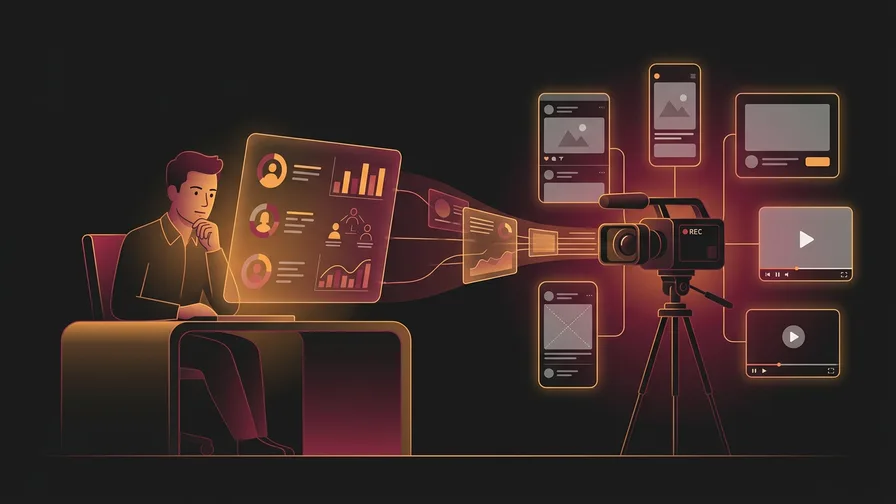
The answers to those questions should shape everything: the tone, the length, the platform, what you say, and how you say it. A video aimed at a 45-year-old business owner looking for a reliable service provider sounds and looks completely different from one aimed at a 22-year-old shopping for a lifestyle product.
If you are not sure who your target audience is in specific terms, that is worth sorting out before investing in video content. Vague targeting produces vague videos.
2. Lead With the Point
In video, you typically have three to five seconds to convince a viewer to keep watching. If your video opens with a logo animation, a long musical intro, or a slow build-up to the actual point, most people will scroll past before they reach anything useful.
Lead with the most compelling part of your message. Open with the problem you solve, a surprising fact, a direct question to the viewer, or a clear statement of what this video delivers. Give the viewer a reason to stay before asking them to give you their time.
This applies on every platform. Whether it is a 15-second Instagram Reel, a 60-second Facebook ad, or a five-minute YouTube explainer, the hook matters. Strong openings dramatically improve watch time, and watch time is one of the primary signals that determines how widely your video gets distributed by platform algorithms.
3. Prioritize Audio Quality Over Fancy Visuals
Most people will tolerate average video quality from a small business. Almost no one will sit through bad audio. If your viewer cannot hear you clearly, or if there is distracting background noise, they will leave within seconds regardless of how good your content is.

A decent external microphone costs relatively little and makes an enormous difference. Record in a quiet space. If you are recording outdoors, be aware of wind. If you are indoors, be aware of echo. Test your audio before recording a full take.
Visually, good natural lighting and a clean, uncluttered background are enough for most business videos. You do not need a professional studio. But bad audio will undermine everything else, so that is where to invest first if you have a limited budget.
4. Every Video Needs One Clear Call to Action
Every marketing video should ask the viewer to do one specific thing next. Not two things. Not a list of options. One clear action.
That action might be visiting your website, booking a call, downloading a resource, subscribing to your channel, or following your account. The specific action depends on the video’s purpose and where it sits in the customer journey. An awareness-stage video for a cold audience might simply ask viewers to follow for more. A bottom-of-funnel video for warm prospects might direct them to book a consultation.
Free Consultation
Ready to get more from your marketing?
Book a free call and we'll look at what's working, what's not, and where to focus next.
Book a Free CallSay the call to action clearly, and say it more than once if the video is longer than a minute. Put it in text on screen as well as in speech. Make it easy to act on immediately. If your CTA is "visit our website," the link should be accessible from wherever the viewer is watching.
Speaking of making it easy for people to take the next step: your website needs to be set up to receive that traffic and convert it. If someone watches your video and clicks through to a slow, confusing, or outdated site, the video’s work is wasted. Our landing page design services are built around exactly this problem.
5. Optimize for the Platform and the Context
A video created for one platform rarely performs optimally on another without adjustment. Each platform has different format requirements, viewer behaviour, and algorithm signals that reward certain types of content.
A few practical considerations:
- Instagram and TikTok: Vertical (9:16) format. Short, fast-paced, hook within 2 seconds. Captions are essential because many viewers watch without sound.
- Facebook: Square (1:1) or vertical video performs better than landscape in the feed. Captions matter here too.
- YouTube: Landscape (16:9). Longer content works here. Titles, thumbnails, and the first 30 seconds determine whether viewers stay.
- LinkedIn: Professional tone. Business-focused content. Square or landscape works. Viewers expect substance.
- Your website: Landscape is standard. Keep it focused. Video on a product or service page should explain the specific offering, not be a general brand piece.
Beyond format, add relevant keywords to your video titles and descriptions where appropriate. This helps with discoverability on YouTube (which functions as a search engine) and supports your overall SEO strategy when videos are embedded on your site.
A Few More Practical Notes
Consistency matters more than perfection. A business that publishes one video per week, imperfectly but reliably, will build a far more engaged audience than one that publishes one polished video every three months. The algorithm rewards consistency. Your audience learns to expect and look for your content.

Repurpose what you create. A five-minute video can become multiple short clips for Reels or TikTok, a written blog post, a series of social media quotes, and material for an email newsletter. Creating one piece of video content and distributing it across multiple formats multiplies the return on your production effort.
If you are building out a more complete digital marketing strategy that includes video, paid advertising, and organic content, our team can help. Book a free introductory call to talk through what makes sense for your business.
Frequently Asked Questions
How long should a marketing video be?
It depends on the platform and the purpose. For social media ads and awareness content, 15 to 60 seconds is generally the effective range. For educational or product explanation content on YouTube or your website, two to five minutes is common. The rule of thumb: as long as it needs to be to make the point, and no longer.
Do I need professional equipment to make good marketing videos?
No. A modern smartphone camera is sufficient for most marketing video needs. What matters more is good lighting, clear audio (invest in an external mic), a clean background, and a well-prepared script or talking points. Production quality matters, but you can reach a professional-enough standard without expensive gear.
Should I add captions to my videos?
Yes, almost always. A significant portion of social media video is watched without sound, especially in mobile feeds. Captions make your content accessible to this audience and also improve accessibility for viewers who are deaf or hard of hearing. Most platforms now offer auto-captioning, which you can edit for accuracy.
How do I measure whether my marketing videos are working?
The metrics that matter depend on your goal. For awareness, look at views, reach, and watch time. For engagement, look at comments, shares, and saves. For conversion, track click-through rates and the actions viewers take after watching. Set a specific goal for each video before you publish it, so you know what success looks like.